Type “On Cloud” into a search bar and you’ll notice something odd — some results call it a running shoe, others call it a sneaker. Both are technically correct, and understanding why helps explain why the same brand can feel equally at home on a 10K and a coffee run.
This article is for general information only. Fit, comfort, and terminology preferences vary by individual and region.
It’s Really a Naming Habit, Not a Strict Category
In everyday British English, “trainer” and “sneaker” are often used loosely to describe almost any athletic-style shoe — running-specific or not. Running shoes is the more precise term, referring to models specifically engineered for the mechanics of running: impact absorption, stride support, and breathability under sustained effort.
Where On Cloud Blurs the Line on Purpose
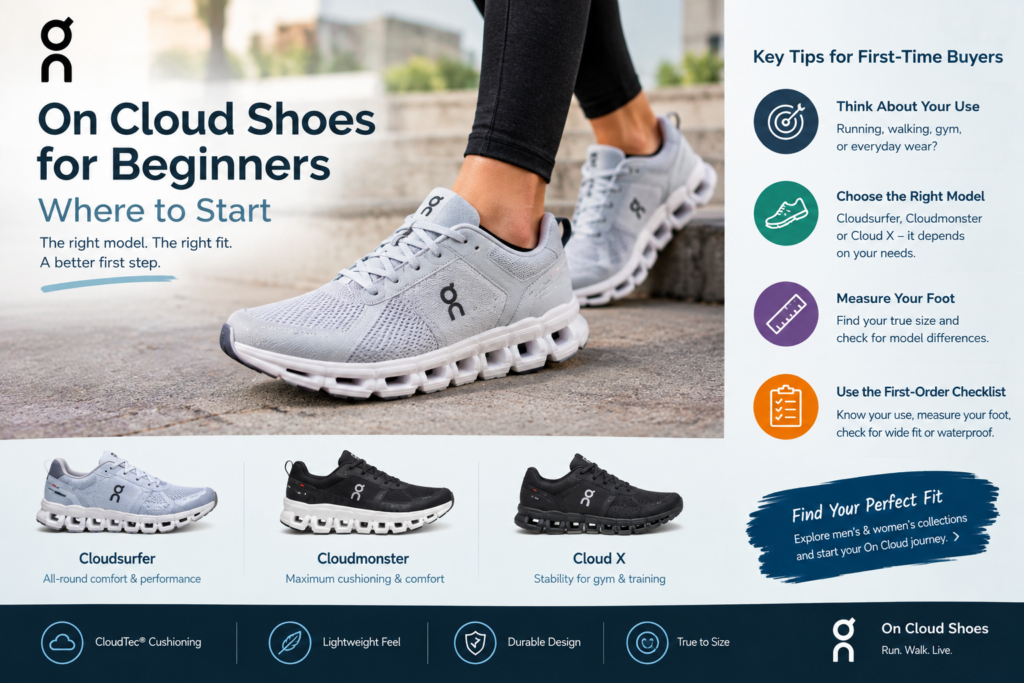
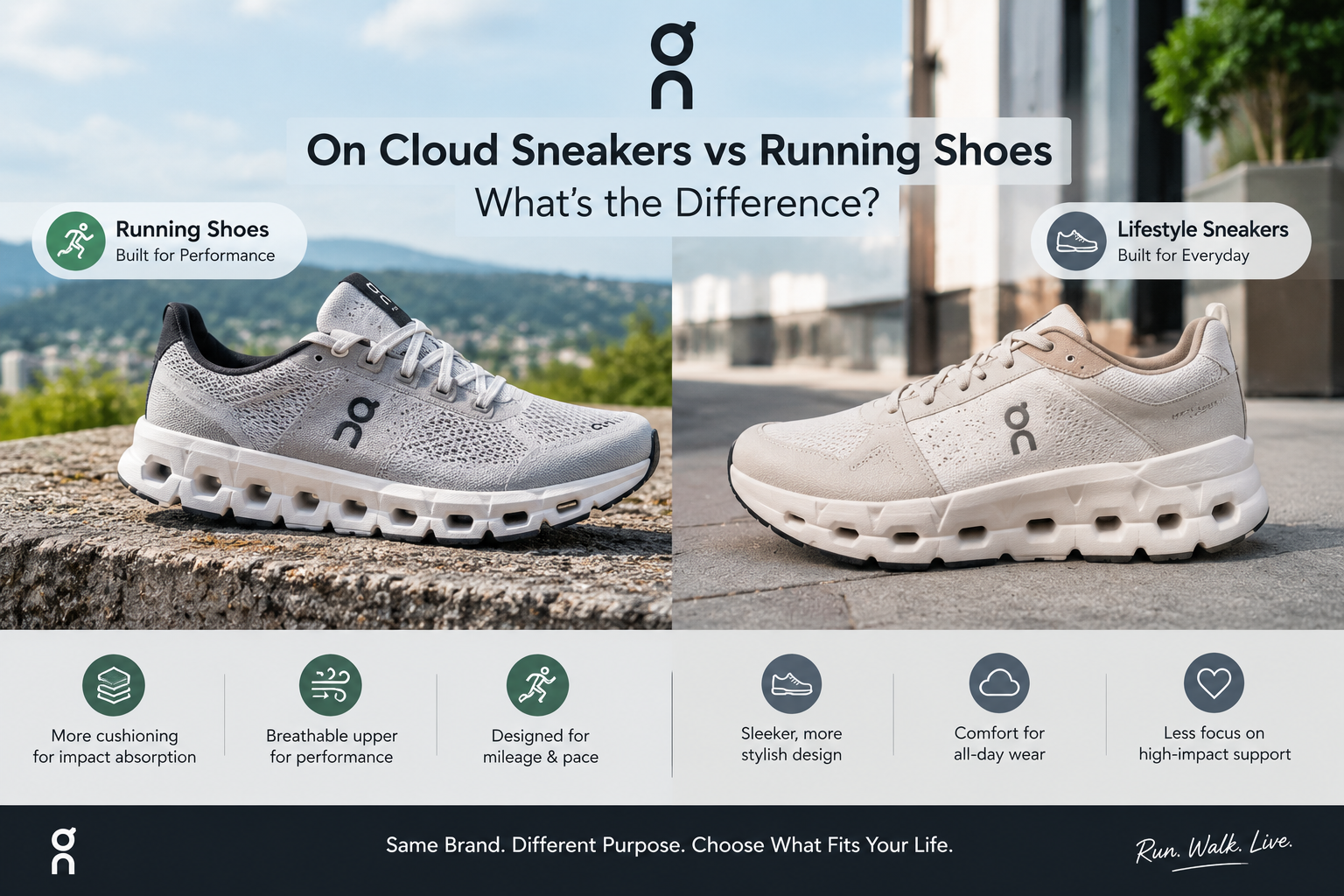
Models like the Cloudsurfer or Cloudmonster are genuinely built for running performance. Others, like the Cloudnova, lean further into everyday, lifestyle-focused design — still comfortable, but not engineered around structured training the same way.
The shoe’s name alone won’t tell you which category it falls into — the model’s actual build does.
How to Tell Which One You’re Actually Looking At
- Sole structure: Running-specific models tend to have more pronounced cushioning built for repeated impact.
- Upper material: Performance running shoes typically prioritise breathability over styling.
- Marketing language: Product pages calling out mileage, pace, or training use are running-focused. Ones describing “everyday comfort” or “streetwear” lean lifestyle.
A Practical Way to Choose
If you’re training regularly or covering real distance, start with a model explicitly built for running. If you want something comfortable for daily wear without any specific training goal, a lifestyle-leaning model works just as well and often looks better with everyday outfits.
Common Questions
Are On Cloud sneakers good for running?
Some are, some aren’t — it depends on the specific model. Running-focused models like the Cloudsurfer are built for it; lifestyle-leaning ones like the Cloudnova are better suited to everyday wear.
What’s the actual difference between a sneaker and a running shoe?
“Sneaker” is a broad, casual term for athletic-style footwear. “Running shoe” specifically refers to a shoe engineered for the mechanics of running.
Can I use a lifestyle sneaker for light jogging?
For short, occasional jogs, many people manage fine. For regular or longer-distance running, a purpose-built running shoe will generally feel more supportive.
Does it matter what a shoe is called if it feels comfortable?
Comfort matters most day to day, but for structured training, choosing a model actually engineered for running tends to hold up better over time and distance.
Ready to see which category fits your needs? Browse our men’s and women’s collections, or explore the full On Cloud trainers UK range.