

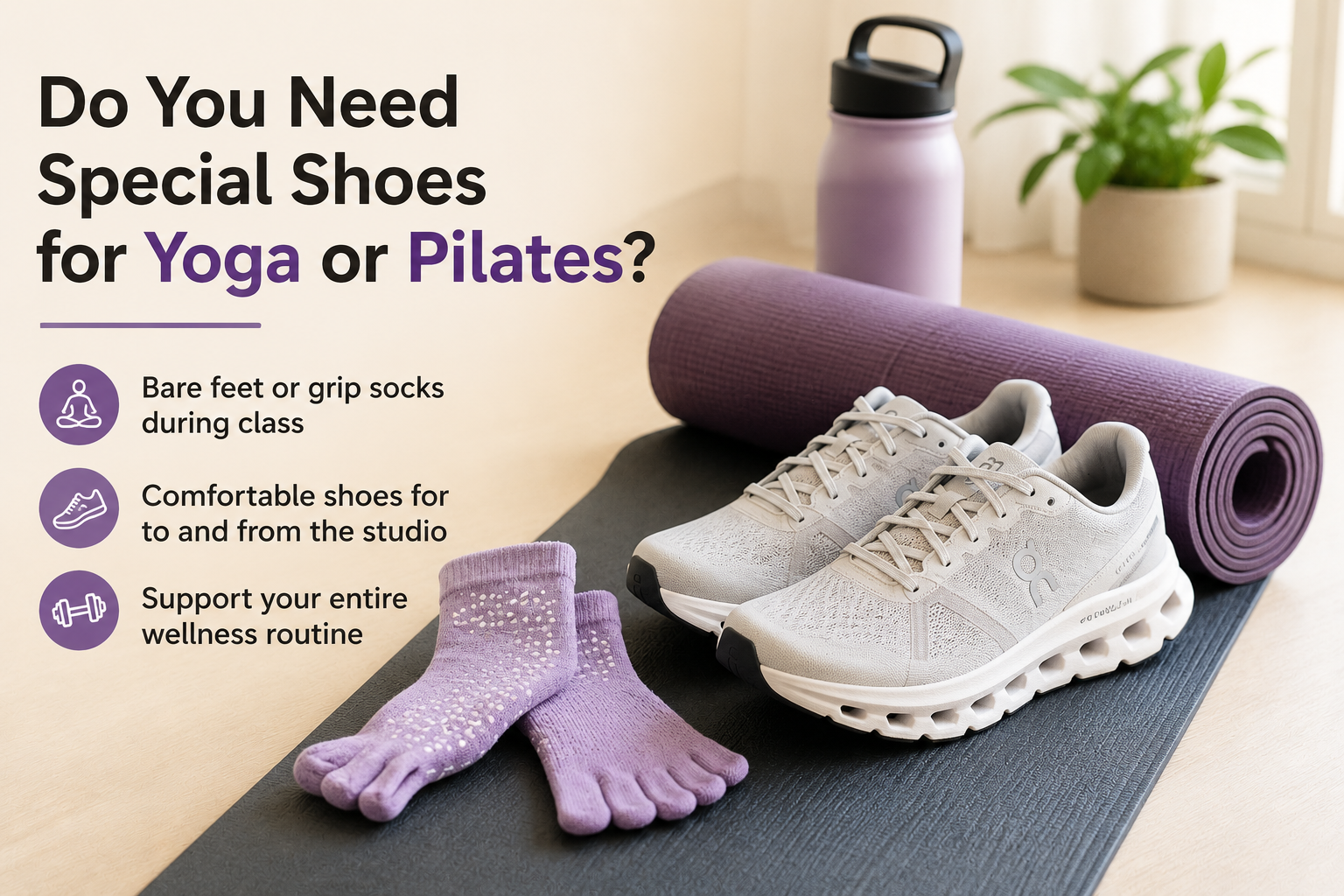
If you’ve ever shown up to a Pilates or yoga class in trainers and immediately felt out of place, you’re not imagining it. Most studio-based practices are built around bare feet or grip socks, not cushioned footwear — and understanding why helps explain when a good trainer actually does matter around your practice, even if it’s not on the mat itself.
Why Bare Feet or Socks Are the Norm in Studio Classes
Pilates, particularly Reformer work, and most yoga styles rely heavily on direct foot contact with the mat, machine, or floor for grip, balance, and precise positioning. A thick, cushioned sole gets in the way of that — it reduces the ground feedback your feet need to engage properly and can actually make balance-heavy poses or transitions harder rather than easier. This is why studios generally recommend bare feet or grip socks rather than trainers for the practice itself.
So Where Does a Shoe Like the Cloud X or Cloudsurfer Actually Fit In?
Just because you won’t wear trainers during class doesn’t mean footwear stops mattering. The walk to and from the studio, changing before and after, or a low-impact movement day that isn’t strictly mat-based are all moments where a comfortable, well-cushioned shoe genuinely helps. Our Cloudsurfer is a solid everyday option for this — comfortable for walking, easy to slip on and off before class, and versatile enough for the rest of your day.
If your routine also includes strength or mat-based conditioning work alongside yoga or Pilates, our Gym Shoes collection is worth a look for the more structured, floor-based parts of your training.
What About Barre or Studio-Based Classes With More Movement?
Some barre and flow-style classes involve more standing and lateral movement than traditional mat Pilates, and studio-specific grip shoes exist for exactly this reason — designed with thin, flexible soles and built-in grip rather than the cushioning found in a standard trainer. If your studio specifically requires this kind of footwear, it’s worth checking with them directly rather than assuming a regular trainer will work.
Comfort for the Rest of Your Wellness Routine
Beyond the class itself, comfortable everyday footwear still plays a role in a movement-focused lifestyle — standing through a long day, walking between errands, or simply being on your feet more than usual on a day you’ve also trained. This is really where a cushioned, versatile shoe earns its place, even if it never actually touches a yoga mat.
Frequently Asked Questions
Can I wear trainers during a Pilates class?
Generally, no — most studios recommend bare feet or grip socks, since standard trainers reduce the ground feel needed for balance and precise foot positioning during exercises.
Do I need special shoes for yoga?
Most yoga is practised barefoot. Special footwear typically isn’t required unless you’re doing a hybrid class that includes more standing movement, in which case checking with your studio is the best approach.
What shoes should I wear to and from a Pilates or yoga class?
A comfortable, easy-to-remove trainer works well for this — something like the Cloudsurfer, which is quick to slip on and off and comfortable for the walk or commute either side of class.
Are grip socks the same as grip shoes?
They serve a similar purpose but aren’t identical. Grip socks are thinner and closer to barefoot, while dedicated grip shoes offer a bit more structure while still avoiding the thick cushioning of a standard trainer.
Explore the Range
Browse our full On Cloud shoes UK collection for everyday comfort beyond the studio.
Meta Title: Do You Need Special Shoes for Yoga or Pilates?